Forget Milk Snatcher Thatcher, meet Hamburglar Boris
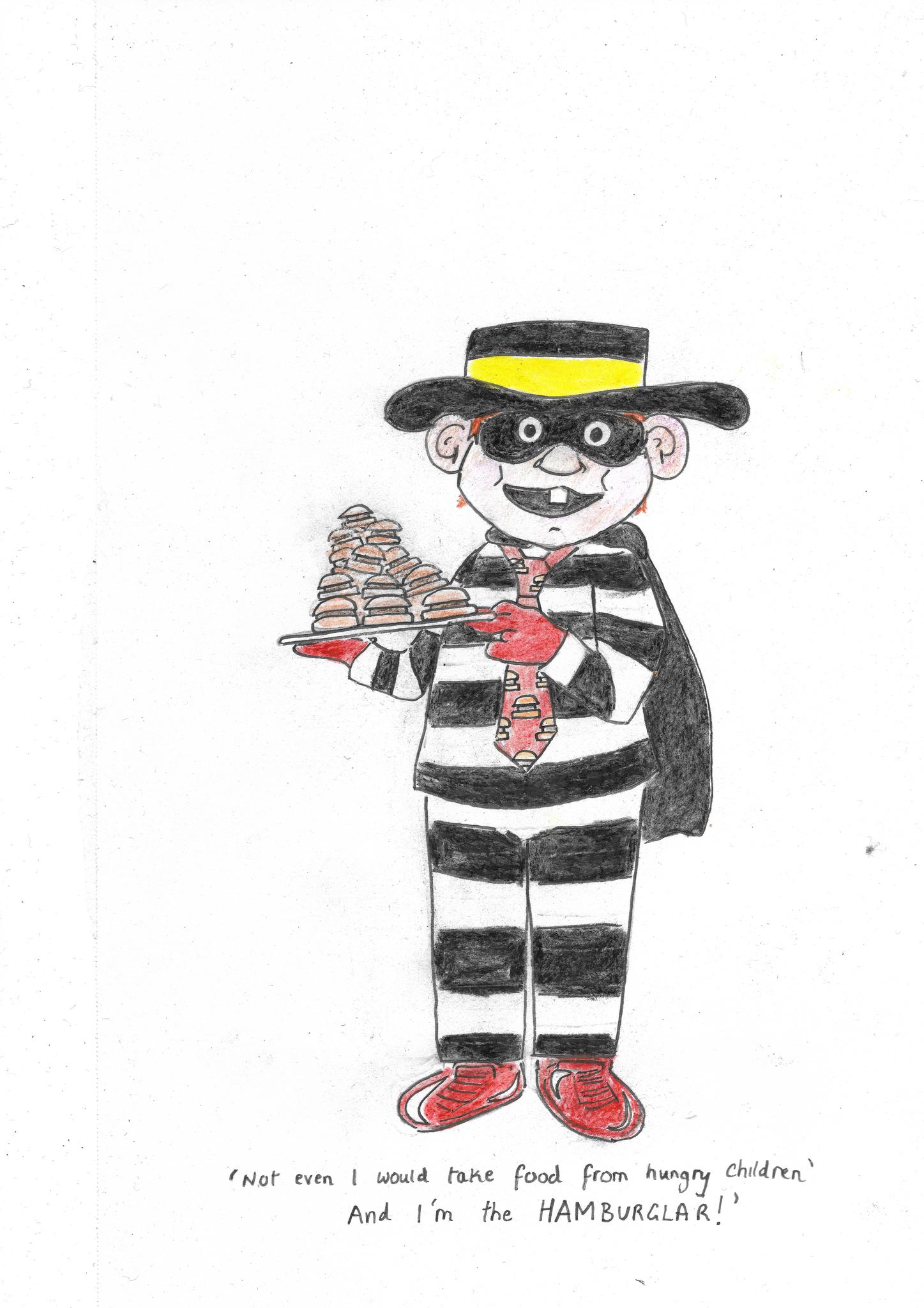
In the 1970s, McDonalds launched an advertising campaign to promote new play areas in their restaurants. With the help of marketing company, Needham, Harper and Steers, the fast-food chain devised a cohort of characters to appear in adverts with the resident clown. Alongside Mayor McCheese and Grimace was the masked, caped and hatted Zorro-esque villain called the ‘Hamburglar’. This fictional thief had the singular purpose to steal McDonalds products and hoard them away for himself. Although the Hamburglar never enjoyed the same celebrity status as Ronald McDonald, the character’s hamburger-related hijinks brought recognition to the brand and he continues to appear in commercials to this day.
The Hamburglar came to mind last week when I read about McDonalds decision to pledge one million meals to FairShare. A move made after the government voted against extending free school meals during the holidays to the 1.4 million disadvantaged children in the UK.
In this reality, instead of stealing from McDonalds customers, the Hamburglar is giving his hoard away. In contrast, instead of fulfilling a governmental duty to ensure that children do not go hungry, the Conservatives are taking food from them.
Free school meals have long been a cornerstone within the British education system. First appearing in 1906 and becoming compulsory in 1944 in the wake of wartime notions of camaraderie and state support. Now, those eligible for free school meals depends on whether parents are recipients of certain benefits. The erosion of the post-war policy began in earnest in the 1980s. Following the 1980 Education Act, schools were no longer obligated to provide school meals except for pupils whose parents were in receipt of supplementary benefit. The subsequent backlash against the privatisation of the scheme, and coining of Margaret ‘milk snatcher’ Thatcher is where the Tories began to be comparable to the mischievous Hamburglar.
But the recent eschewal of responsibility by the Tories, leaving the provision of school meals over holidays for corporate actors to step is a step too far.
Some commentators maintain that it is ultimately the responsibility of the parents to provide meals during holidays. However, the financial circumstances which prevent them from being able to afford meals is unlikely to change because their children are off school. Others, like Workington’s MP Mark Jenkinson, were keen to suggest that low-income parents could not be trusted not to trade food parcels for narcotics, alcohol and other contraband. This deeply-classist notion not only plays into the Victorian idea that poverty is a choice but also suggests that bad parenting is to blame for a parents inability to afford food during a holiday. This myopic statement ignores the impact that austerity has had on deprived areas since 2010, not to mention the economic cost of Tier 3 restrictions.
Others argued that that the £20 million price-tag of the school meal scheme is too expensive. These perspects are let down by their lack of scope. In the grand scheme of things, £20 million a week is little in comparison to the outlandish schemes cooked up in Johnson’s kitchen. Rushi Sunaks’s Eat-Out-to-Help-Out cost the country £500 million. Not to mention the fact that the government is spending billions on black hole contracts to companies with suspicious links to Cabinet ministers. Indeed, a recent Financial Times article found that the Tories awarded £10bn worth of contracts to private companies since March 2020, much of which has gone to waste.
The Hamburglar was never anything more than a harmless marketing tool. Customers at McDonalds never felt any real threat that their food would be snatched from them. The possibility that a cabal of clowns will take food from hungry children is, however, the reality of Tory Britain.
